 Épingler
 I discovered these cookies by accident on a Tuesday afternoon when my neighbor mentioned she'd been craving something lemony but soft—not the typical crispy sugar cookie. That same week, I had a container of cottage cheese sitting in my fridge that needed using, and something clicked: why not blend that creamy tang into a tender cookie? The first batch came out almost too good, with this subtle richness underneath the bright lemon that made people ask for the recipe before they'd even finished eating.
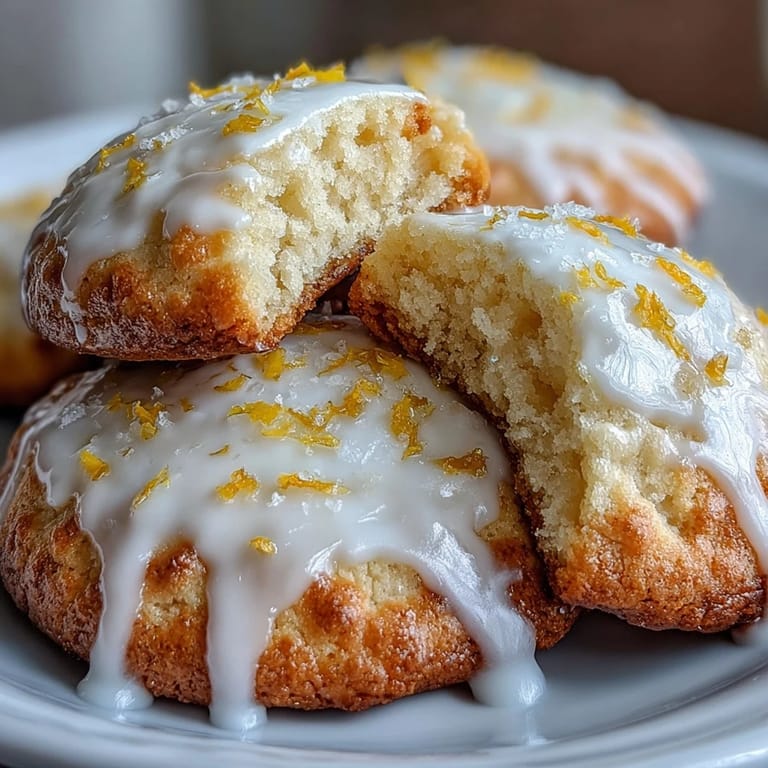
Last spring, I made these for my daughter's school bake sale, and watching kids' faces light up when they bit through the glaze into that tender crumb was worth every minute of mixing. One little girl came back to ask if I used magic in them—her mom later told me she'd made the same batch at home three times in two weeks.
Ingredients
- All-purpose flour (2 1/4 cups): This is your structure; don't skip the measuring cup and level it off, or your cookies will bake differently than mine did.
- Baking soda and baking powder (1/2 teaspoon each): They work together to give the cookies that tender, cake-like lift without making them fluffy or cakey.
- Salt (1/4 teaspoon): Salt deepens the lemon flavor and balances sweetness in a way people never consciously notice but absolutely taste.
- Unsalted butter (1/2 cup, softened): Softened butter is crucial; cold butter won't cream properly and your dough will feel gritty rather than fluffy.
- Granulated sugar (1 cup): This sweetens the dough and gives the cookies their tender structure; don't substitute brown sugar or the whole thing shifts.
- Cottage cheese (1 cup, full-fat and drained): Full-fat is non-negotiable here; it adds moisture and a subtle tang that makes these cookies unforgettable, but drain it well or the dough gets too wet.
- Large egg: This binds everything together and adds richness that you'll taste in the final crumb.
- Lemon zest and juice: Fresh lemon is essential; bottled juice won't give you that same bright, alive flavor that makes these cookies sing.
- Vanilla extract (1 teaspoon): Use pure vanilla, not imitation; it rounds out the lemon beautifully.
- Sugar for rolling (1/4 cup): This creates a subtle sparkle and light crust on the outside of each cookie.
- Powdered sugar for glaze (1 cup, sifted): Sifting prevents lumps that can make the glaze look grainy; take the extra 30 seconds.
Tired of Takeout? 🥡
Get 10 meals you can make faster than delivery arrives. Seriously.
One email. No spam. Unsubscribe anytime.
Instructions
- Set your stage:
- Preheat your oven to 350°F and line two baking sheets with parchment paper while you're thinking about it—there's nothing worse than scrambling for parchment with wet dough in your hands.
- Combine your dry ingredients:
- In a medium bowl, whisk together the flour, baking soda, baking powder, and salt until they're evenly distributed. This whisking step isn't just for looks; it aerates the flour and makes sure the leavening agents are spread throughout.
- Cream butter and sugar:
- Beat the softened butter and sugar together for about 2 minutes until the mixture looks pale and fluffy, like soft clouds. You're incorporating air here, which helps the cookies rise and get that tender texture.
- Add the cottage cheese and eggs:
- Mix in the drained cottage cheese first until it's smooth, then add the egg, lemon zest, lemon juice, and vanilla all together. The mixture might look slightly curdled at this point, but keep beating until it comes together into a smooth, pale batter.
- Bring the dough together gently:
- Add the dry ingredients to the wet ingredients in one addition and mix until just combined; overmixing develops gluten and makes the cookies tough rather than tender. You want to stop mixing the second you don't see flour streaks anymore.
- Shape and sugar-coat:
- Scoop tablespoon-sized portions of dough and roll each one between your palms into a ball, then roll in granulated sugar until lightly coated. Place them 2 inches apart on your prepared baking sheets because they do spread a little.
- Bake with care:
- Bake for 11 to 13 minutes; the edges should look set and lightly golden, but the centers should still feel slightly soft to the touch. This is the difference between perfect and overbaked, so set a timer and trust it.
- Cool thoughtfully:
- Let the cookies sit on the baking sheet for 5 minutes to firm up, then transfer them to a wire rack to cool completely. This prevents them from breaking apart when you move them.
- Make the glaze:
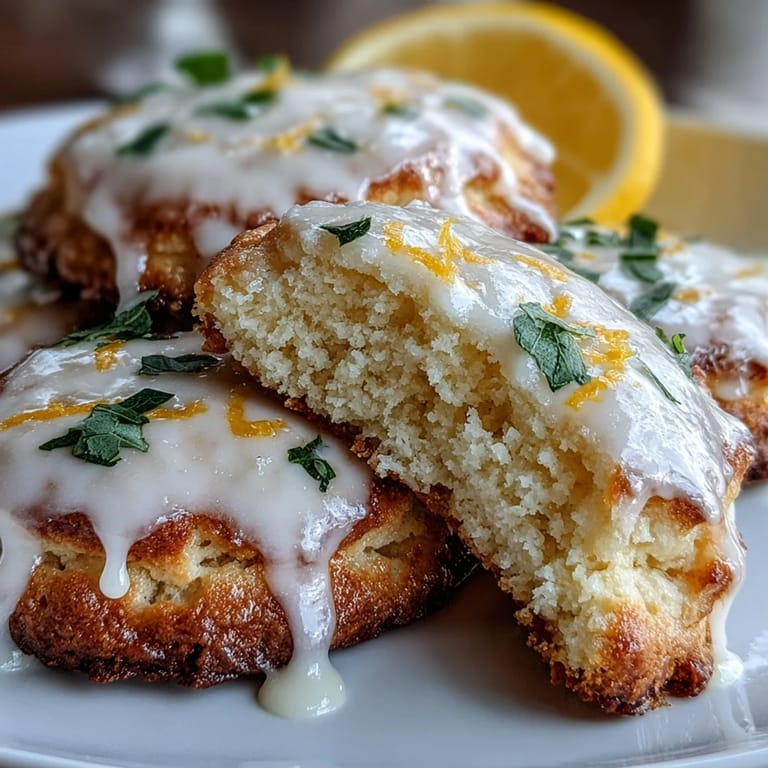
- Whisk the sifted powdered sugar with fresh lemon juice until smooth and pourable; the glaze should drip slowly from your whisk, not splash. Add the lemon zest if you want extra brightness.
- Finish with the glaze:
- Drizzle the glaze over completely cooled cookies and let it set for at least 15 minutes before serving so it hardens slightly and doesn't run everywhere.
 Épingler
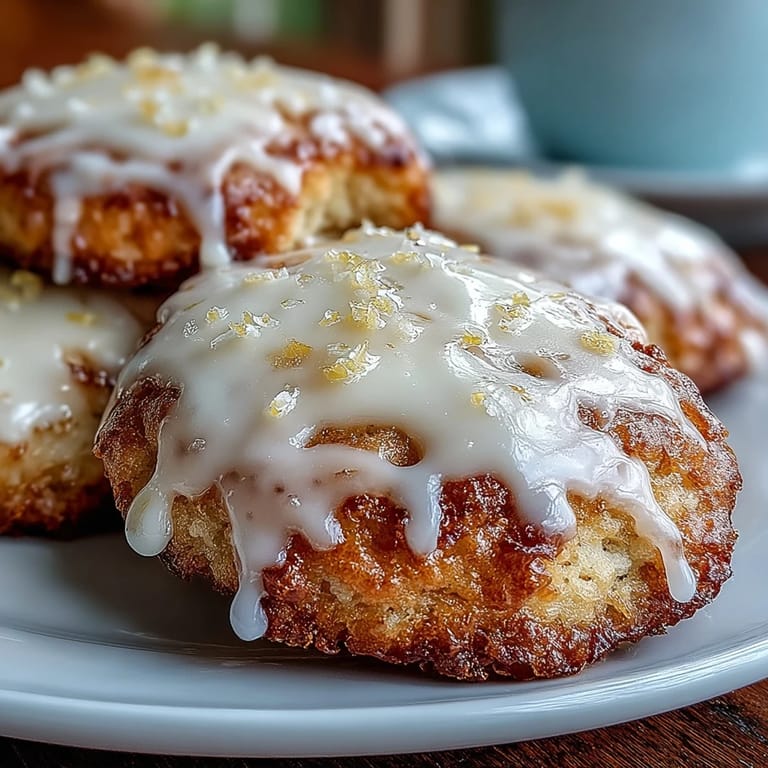
 There was a morning when my partner brought me a cookie before I'd even had coffee, still warm, with the glaze barely set. Without saying anything, he smiled and left—but I understood that smile meant he'd tasted something he wanted to remember, something he'd want to eat again and again.
The Secret of Cottage Cheese in Baking
When I first read that cottage cheese belonged in cookies, I was skeptical—genuinely skeptical. But cottage cheese is basically milk solids with moisture, which means it adds incredible tenderness and subtle tang without the heaviness of sour cream or cream cheese. The protein in cottage cheese creates a tender crumb structure that keeps these cookies soft long after typical sugar cookies would harden into little rocks. I learned this the hard way after making dozens of batches, and now I sneak it into scones and quick breads too.
Why Fresh Lemon Changes Everything
The difference between fresh lemon and bottled lemon juice is the difference between a song and someone humming off-key. Fresh lemon juice has this bright, alive quality that bottled juice just doesn't capture, no matter how it's labeled or how much you pay for it. When you use fresh juice and fresh zest, people don't just taste lemon; they taste the sunshine and brightness of a real lemon, which sounds dramatic but is absolutely true. I once made a double batch—half with fresh lemon and half with bottled juice—and my sister picked out the fresh-lemon batch without being told.
Storage and Making These Ahead
These cookies keep beautifully in an airtight container at room temperature for up to three days, which makes them perfect for baking on the weekend when you have time. You can also freeze the unbaked dough balls for up to a month; just bake them straight from the freezer, adding a minute or two to the baking time. The dough is actually easier to work with when it's been refrigerated for an hour, so if you're making these for a gathering, you can do all your prep work in the morning and bake in the afternoon.
- Don't store these cookies in the refrigerator or they'll firm up too much and lose their signature softness.
- If they do start to harden after a few days, microwave them for 10 seconds to bring back that tender texture.
- Keep the glaze separate if you're storing them for more than a day, then drizzle fresh glaze just before serving for the best appearance.
 Épingler
 These cookies became a regular on my kitchen counter not because they're complicated or time-consuming, but because they hit that perfect note between simple and special. Every time I make them, I remember my neighbor's request and that happy accident of needing to use up cottage cheese, and I'm grateful for both.
Questions fréquentes sur la recette
- → Quel type de fromage cottage utiliser?
Optez pour un fromage cottage entier et bien égoutté afin d'éviter un excès d'humidité et d'assurer une texture moelleuse.
- → Peut-on remplacer le citron par un autre agrume?
Oui, le citron peut être remplacé par du jus et zeste d'orange ou de lime pour un goût fruité différent tout en conservant la fraîcheur.
- → Comment obtenir des biscuits bien moelleux?
Ne pas trop mélanger la pâte et respecter le temps de cuisson pour que les biscuits restent tendres au centre.
- → Puis-je conserver ces biscuits plusieurs jours?
Oui, conservez-les dans une boîte hermétique à température ambiante jusqu'à 3 jours pour préserver leur moelleux.
- → Quelle est la fonction du glaçage citronné?
Il apporte une touche sucrée et acidulée qui complète la douceur des biscuits, offrant un contraste de saveurs et une belle finition.
- → Peut-on ajouter des graines pour varier les textures?
Ajouter une pincée de graines de pavot dans la pâte est une option intéressante pour apporter un léger croquant et un goût subtilement noisetté.