 Épingler
 My neighbor Maria brought a container of this soup to my door one chilly October afternoon, insisting I try it before the season turned too cold. The moment I opened the lid, this warm brick-red color seemed to glow back at me, and I knew I had to figure out how she made it. Turns out, she'd been roasting her own peppers all summer, freezing them in batches, and this soup was her secret way to use them up. That first spoonful was velvet and comfort in a bowl, nothing like the thin tomato soups I'd known before.
I made this for my book club a few winters back, and someone asked if I'd added cream—I hadn't, but watching their faces when I explained the beans did all the heavy lifting was pure satisfaction. They wanted the recipe before dessert even arrived, which tells you everything about how this soup wins people over.
Ingredients
- 3 large roasted red bell peppers, peeled and chopped: These are the soul of the soup—sweet, silky, and worth roasting yourself if you have time, though quality jarred ones work beautifully and save your hands from the char.
- 2 cans (15 oz each) cannellini beans, drained and rinsed: Don't skip the rinsing step; it removes the starchy liquid that would make your soup cloudy and dull.
- 1 medium yellow onion, diced: Yellow onions caramelize gently and add subtle sweetness that balances the pepper's brightness.
- 1 medium carrot, peeled and diced: This adds body and a whisper of natural sugar that deepens as it simmers.
- 1 celery stalk, diced: The holy trinity wouldn't be complete without it—celery builds layers of savory flavor you might not notice but definitely would miss.
- 2 cloves garlic, minced: Add this after the softer vegetables or it will burn and turn bitter, a mistake I learned the hard way.
- 4 cups vegetable broth: Use good quality broth; it's one of just a few ingredients, so it deserves to be something you'd actually enjoy drinking on its own.
- 1 tablespoon olive oil: Just enough to coat the pot and let your vegetables release their flavors without becoming greasy.
- 1 teaspoon smoked paprika: This is what makes people ask what you did differently—it adds warmth and depth that regular paprika can't match.
- 1/2 teaspoon dried thyme: Thyme whispers herbal notes that make the peppers taste even sweeter and more complex.
- 1/4 teaspoon crushed red pepper flakes (optional): A tiny pinch adds mystery and a gentle heat that doesn't overwhelm.
- Salt and freshly ground black pepper to taste: Taste as you go; the beans already carry saltiness from canning, so go easy at first.
Tired of Takeout? 🥡
Get 10 meals you can make faster than delivery arrives. Seriously.
One email. No spam. Unsubscribe anytime.
Instructions
- Warm your base with olive oil:
- Heat the oil in a large pot over medium heat until it shimmers slightly—this is your signal that it's ready for the vegetables. You'll know it's working when the onion hits the pot and immediately starts to soften and smell incredible.
- Build the foundation with aromatics:
- Add the diced onion, carrot, and celery, stirring occasionally for 5 to 6 minutes until everything softens and the onion turns translucent. This slow start is where most of your flavor develops, so don't rush it by cranking up the heat.
- Wake everything up with garlic:
- Toss in the minced garlic and let it cook for just one minute—long enough to release its aroma but not so long that it browns and loses its freshness. The fragrance that fills your kitchen at this moment is basically edible.
- Layer in the warmth and spice:
- Stir in the roasted peppers, smoked paprika, thyme, and red pepper flakes if you're using them, then cook for two minutes. This short cooking time lets the spices bloom into the oil without any of them burning.
- Bring the beans and broth into the party:
- Add the drained cannellini beans and vegetable broth, stirring well to combine everything. Bring it all to a gentle boil, then lower the heat and let it simmer uncovered for 15 minutes so the flavors can marry and deepen.
- Blend to silky perfection:
- Using an immersion blender, puree the soup right in the pot until you reach your preferred texture—smooth if you love velvet, or leave some gentle texture if you want to feel the beans. If using a countertop blender, work in careful batches and never fill it more than halfway, letting the steam escape before blending.
- Season to your taste:
- Add salt and freshly ground black pepper gradually, tasting between additions. What tastes right to you might be different from someone else, and that's the beauty of cooking for yourself.
- Serve with love:
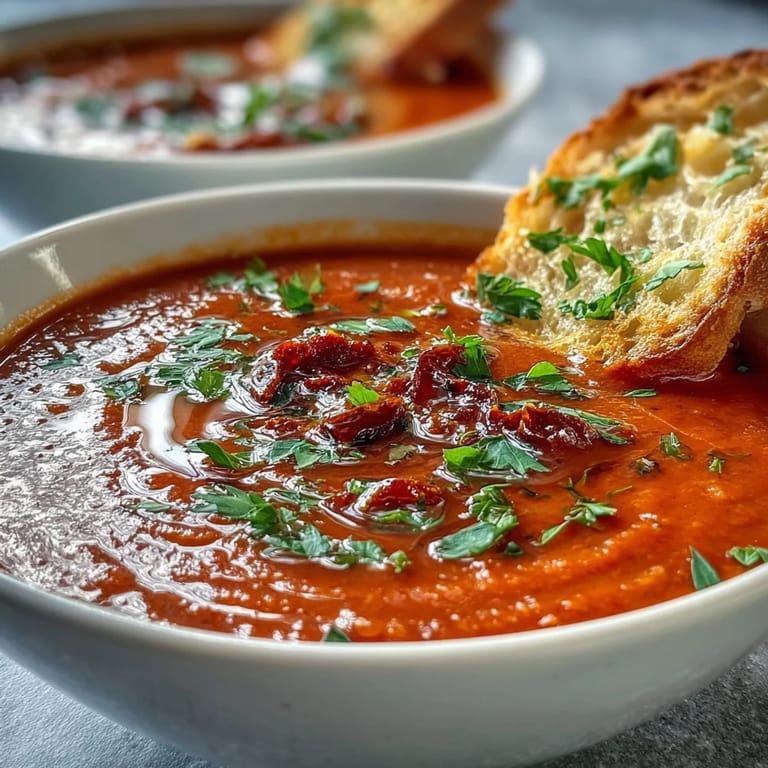
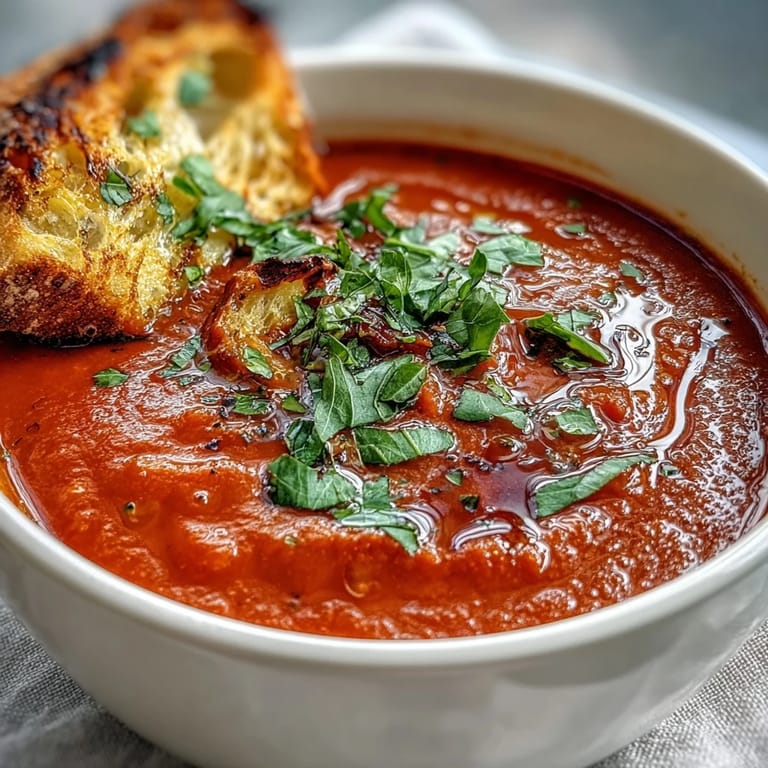
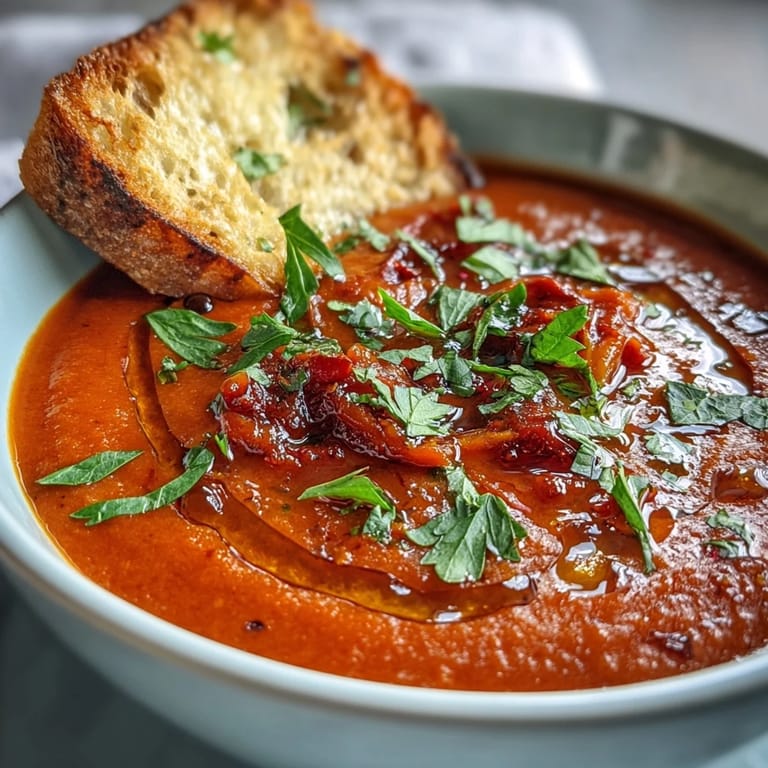
- Ladle the soup into bowls and finish each one with fresh parsley, a generous drizzle of good olive oil, and crusty bread for soaking up every last drop. This is the moment where a simple pot of soup becomes a small moment of joy.
 Épingler
 My son, who claims to hate beans, has eaten three bowls of this soup without complaint. Sometimes the quiet victories at the dinner table matter more than any fancy plating or technique.
The Magic of Roasting Your Own Peppers
If you decide to roast peppers yourself, char them whole under the broiler, turning them occasionally until the skin is completely blackened all over—it takes about 10 minutes and looks dramatic and slightly scary, which is part of the fun. Transfer them to a covered bowl and let them steam for 10 minutes; the skin will slip right off like you're unwrapping a gift, revealing that glossy, tender flesh underneath. The flavor difference is worth the extra time, and honestly, roasting peppers feels like real cooking in a way that opening a jar sometimes doesn't.
Texture and Creaminess Without Dairy
The cannellini beans are doing all the work here to create creaminess—when they blend, their natural starches and the immersion blender's action create a smooth, luxurious texture that feels indulgent even though there's no cream involved. If you want it even more decadent, a splash of coconut milk stirred in right before serving adds richness, though it's not necessary. I've also experimented with adding a tablespoon of tahini near the end of cooking, which nobody would ever guess is in there but somehow makes everything taste more rounded and complete.
Storage and Make-Ahead Magic
This soup is a freezer dream and tastes arguably better the next day once everything has settled into knowing each other better. You can store it in glass containers or plastic freezer bags (lay them flat so they stack efficiently), and it keeps beautifully for up to three months, which makes it the perfect insurance policy for hectic weeks ahead.
- Let the soup cool completely before freezing to avoid shocking your freezer with hot food.
- Thaw overnight in the refrigerator and reheat gently on the stovetop, adding a splash of broth if it seems too thick.
- Make a double batch when you have the energy—your future self will thank you with genuine gratitude.
 Épingler
 This soup has become my answer to so many questions: what to make for dinner, what to bring to someone who needs comfort, what to serve when you want people to feel welcomed and cared for. It's simple enough to make on a weeknight but special enough to serve with pride.
Questions fréquentes sur la recette
- → Comment obtenir des poivrons rouges parfaitement rôtis ?
Placez les poivrons sous le gril jusqu'à ce que la peau fonce et cloque. Ensuite, laissez-les reposer dans un bol couvert pour faciliter l’épluchage.
- → Peut-on utiliser d'autres haricots que les cannellini ?
Oui, les haricots Great Northern ou navy peuvent remplacer les cannellini sans altérer la texture.
- → Comment ajuster la texture de la soupe ?
Mixez plus ou moins longtemps selon la consistance désirée. Pour plus de crémeux, ajoutez un peu de lait de coco avant de mixer.
- → Quels assaisonnements conviennent le mieux ?
Le paprika fumé, le thym séché et les flocons de piment rouge apportent un équilibre entre douceur et chaleur subtile.
- → Peut-on la préparer à l'avance ?
Oui, cette soupe se conserve bien au réfrigérateur 2-3 jours et se réchauffe facilement sans perte de saveur.