 Épingler
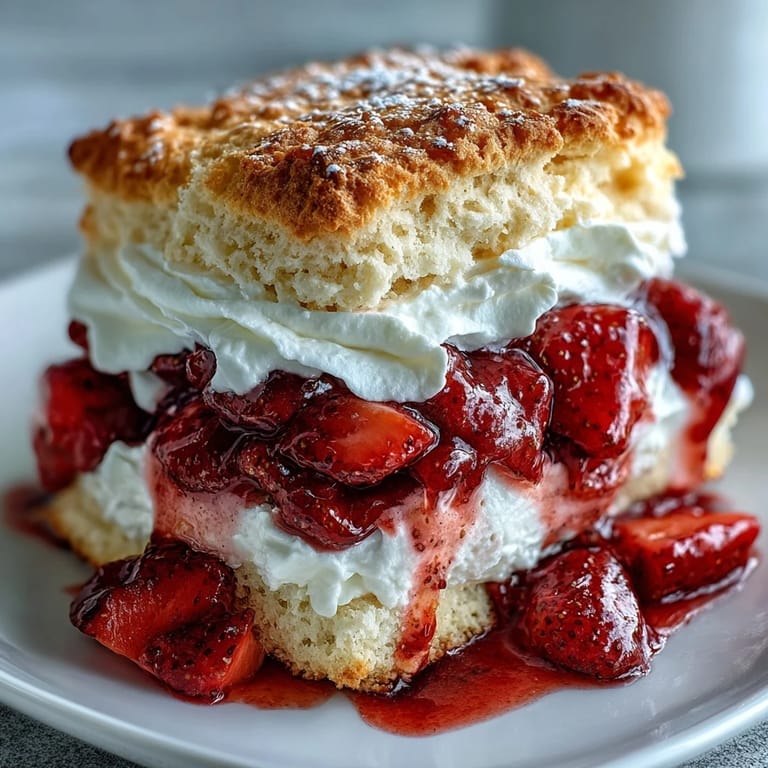
 There's something about summer afternoons that demands strawberry shortcake, even if you're not entirely sure why you're making it until you smell those biscuits coming out of the oven. My grandmother used to say the secret was not overthinking the dough, and I spent years forgetting that advice before it finally clicked. The first time I nailed the texture—those tender, golden layers that practically dissolve on your tongue—I understood what she meant. It's one of those desserts that feels fancy enough for guests but honest enough for a Tuesday when strawberries are at their peak.
I made this for a backyard gathering last July when a friend brought over a basket of strawberries from a local farm, and someone's five-year-old actually put down her phone to eat three layers of it. Watching people's faces when they bit into the warm biscuit, cool cream, and macerated berries all at once—that's when I realized this dessert is pure comfort wearing a party dress.
Ingredients
- All-purpose flour (2 cups): the foundation of tender biscuits, and measuring by weight keeps you honest about not packing it down.
- Granulated sugar for biscuits (1/4 cup): just enough sweetness to let the cream and berries shine without competing.
- Baking powder (1 tablespoon): the lift that makes these biscuits cloud-like rather than dense.
- Baking soda (1/2 teaspoon): works with the buttermilk to deepen flavor and ensure a tender crumb.
- Salt (1/2 teaspoon): non-negotiable for balance; it makes everything taste more like itself.
- Cold unsalted butter, cubed (1/2 cup): coldness is your friend here, creating those little pockets of steam that make biscuits rise and flake.
- Cold buttermilk (3/4 cup plus brushing): the acid reacts with baking soda for tenderness, and the tang won't let the butter overwhelm the palate.
- Vanilla extract (1 teaspoon for biscuits): a whisper of flavor that anchors everything without being obvious.
- Fresh strawberries (1 1/2 pounds): the best berries you can find, because they deserve respect and will taste like summer if you choose well.
- Granulated sugar for strawberries (1/3 cup): draws out the fruit's own juices while concentrating its flavor.
- Lemon juice (1 teaspoon): brightens the strawberries and keeps them from becoming one-note sweet.
- Heavy whipping cream, chilled (1 cup): cold cream whips faster and holds peaks longer than anything at room temperature.
- Powdered sugar (3 tablespoons): dissolves instantly into cream without the grittiness of granulated sugar.
- Vanilla extract for cream (1 teaspoon): adds warmth and depth to what would otherwise be simply sweet.
Tired of Takeout? 🥡
Get 10 meals you can make faster than delivery arrives. Seriously.
One email. No spam. Unsubscribe anytime.
Instructions
- Prepare your workspace:
- Preheat the oven to 425°F and line a baking sheet with parchment paper, which takes two minutes but prevents the bottoms of your biscuits from catching color too quickly. This temperature is hot enough to create steam and lift, so don't second-guess it.
- Build the dry mixture:
- Whisk together flour, sugar, baking powder, baking soda, and salt in a large bowl, making sure everything is evenly distributed so the baking soda doesn't create bitter pockets. You want it to look like fine sand at this point.
- Cut in the cold butter:
- Add your cubed cold butter to the flour mixture and use a pastry cutter, two knives, or your fingertips to break it into pea-sized pieces, working quickly so the butter doesn't warm up. You should still see flecks of butter; they're what creates those beautiful layers.
- Bring the dough together:
- Pour in the cold buttermilk and vanilla, then stir with a fork just until the dough comes together in shaggy clumps—this is where patience matters more than perfection. Overmixing develops gluten and turns your biscuits tough, so stop as soon as you don't see dry flour anymore.
- Shape and cut:
- Turn the dough onto a lightly floured surface and gently pat it into a 1-inch-thick rectangle with your hands rather than a rolling pin, which can compress the layers you've just created. Using a 2 1/2-inch round cutter, cut out biscuits and place them on your parchment-lined sheet, gathering scraps and patting gently to recut until you've used all the dough.
- Finish before baking:
- Brush the tops of each biscuit lightly with buttermilk, which gives them a shiny, golden-brown finish as they bake. This step feels small but makes a visible difference.
- Bake with intention:
- Bake for 15–18 minutes until the tops are deep golden brown and the biscuits sound hollow when you tap them. Don't open the oven door before 15 minutes or the steam escapes and they'll deflate slightly.
- Macerate the strawberries:
- While the biscuits bake, combine sliced strawberries with sugar and lemon juice in a bowl, then let them sit for at least 20 minutes so they release their own juice and become both tender and flavorful. This passive step is when the fruit's natural sugars concentrate.
- Whip the cream:
- Using a chilled bowl and beaters, whip the cold heavy cream with powdered sugar and vanilla until soft peaks form—you want it pillowy and slightly stiff but not overbeaten to the point of graininess. Stop when the cream still has a slight wobble to it.
- Assemble with care:
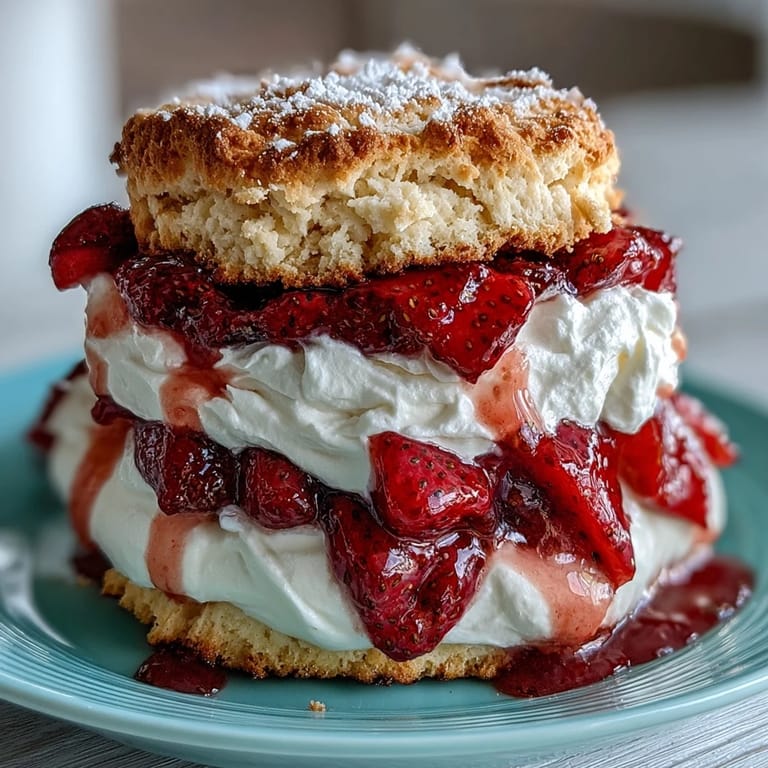
- Once the biscuits have cooled slightly, carefully split each one in half horizontally and layer with macerated strawberries and whipped cream, then top with the other biscuit half, more berries, and a final dollop of cream. This is where the dessert becomes personal; you can be generous or delicate depending on your mood.
 Épingler
 The magic moment happens when someone bites through that warm biscuit and all three components—buttery, creamy, fruity—collide at once, and suddenly you understand why this dessert has survived for a century. It's not complicated, but it's not forgettable either.
The Secret Behind Perfect Biscuit Texture
The difference between a biscuit that flakes and one that's dense comes down to how much you handle the dough and whether your butter stays cold enough to create steam pockets. I learned this the hard way by making about fifteen batches before realizing I was kneading the dough like bread instead of treating it like something fragile. Once I started using my fingertips to gently break up the butter and barely mixing the wet ingredients, everything changed.
Timing and Temperature Matter More Than You'd Think
Oven temperature at 425°F creates the right conditions for the biscuits to rise quickly and set before they can spread and flatten, and those few extra degrees matter more than most recipes let on. I once lowered it to 400°F to be safer and ended up with wider, flatter biscuits that were still good but lost some of that dramatic height. The higher temperature also gives you that deep golden color that signals they're properly baked.
Building Flavor Layers the Right Way
This dessert works because each component respects the others instead of competing—the lemon juice in the strawberries keeps them from being one-dimensional sweet, the vanilla in both the biscuits and cream creates subtle repetition, and the buttermilk's tang prevents the butter from making everything cloying. Even the salt in the biscuits dough serves a purpose, brightening everything else. When you're assembling, remember that a little restraint goes further than trying to make each layer thick and heavy.
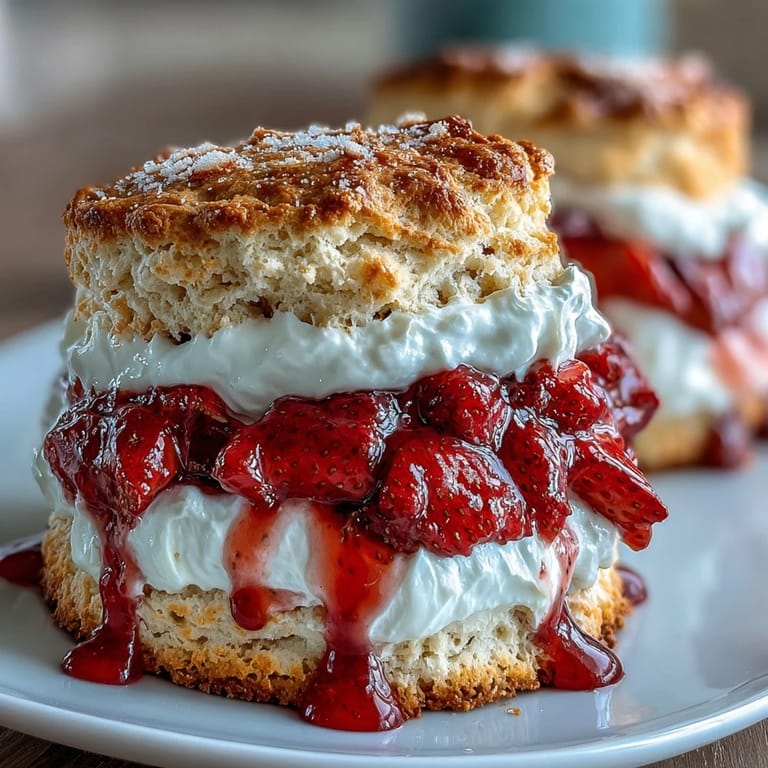
- Assemble just before serving to keep the biscuits from getting soggy, though a little juiciness is actually welcome because it keeps them from tasting dry.
- If your biscuits cool completely, warm them slightly before splitting so they're tender enough to cut without crumbling everywhere.
- This dessert loves being made in small batches for four to eight people rather than trying to scale it up for a crowd, because fresh assembly is part of its charm.
 Épingler
 Make this when someone you care about is visiting or when you want to prove to yourself that homemade dessert is worth the small effort it takes. It's the kind of dish that tastes like love without requiring you to fuss.
Questions fréquentes sur la recette
- → Comment obtenir des biscuits bien beurrés et tendres ?
Utilisez du beurre froid coupé en petits morceaux et travaillez-le rapidement avec la farine pour créer une texture sablée avant d’ajouter le liquide. Cela assure des biscuits légers et moelleux.
- → Quelle est l’importance de macérer les fraises ?
Macerer les fraises avec du sucre et du citron permet de libérer leur jus, intensifiant leur saveur et apportant une agréable douceur ainsi qu’une texture légèrement sirupeuse.
- → Comment réussir une crème fouettée légère et stable ?
Utilisez une crème bien froide et battez-la jusqu’à obtention de pics souples. Évitez de trop fouetter pour ne pas transformer la crème en beurre.
- → Peut-on préparer les biscuits à l’avance ?
Oui, les biscuits peuvent être cuits à l’avance et conservés dans une boîte hermétique. Il est préférable de les assembler juste avant de servir pour préserver leur texture.
- → Quels substituts pour varier la recette ?
Pour varier, ajoutez une touche d’alcool d’orange aux fraises ou remplacez une partie de la crème par du yaourt grec pour une note acidulée.